Insights / Community Conversations
An ongoing statewide conveningEvery organization doing this work knows something the rest of the field needs to hear. This is where we go get it.
Not a survey. Not a focus group with someone reading from a script. Community Capacity Conversations is a running, statewide conversation with the people actually doing the work — executive directors, program managers, case managers, coordinated entry specialists, outreach staff, the person who's been at the front desk for eleven years and knows exactly which intake form nobody reads.
We show up. We ask real questions. We pay attention to what's actually said. And what we hear doesn't stay with us — it comes back to the field as reports, Field Notes, and resources built from what's actually happening, not what anyone assumes is happening.
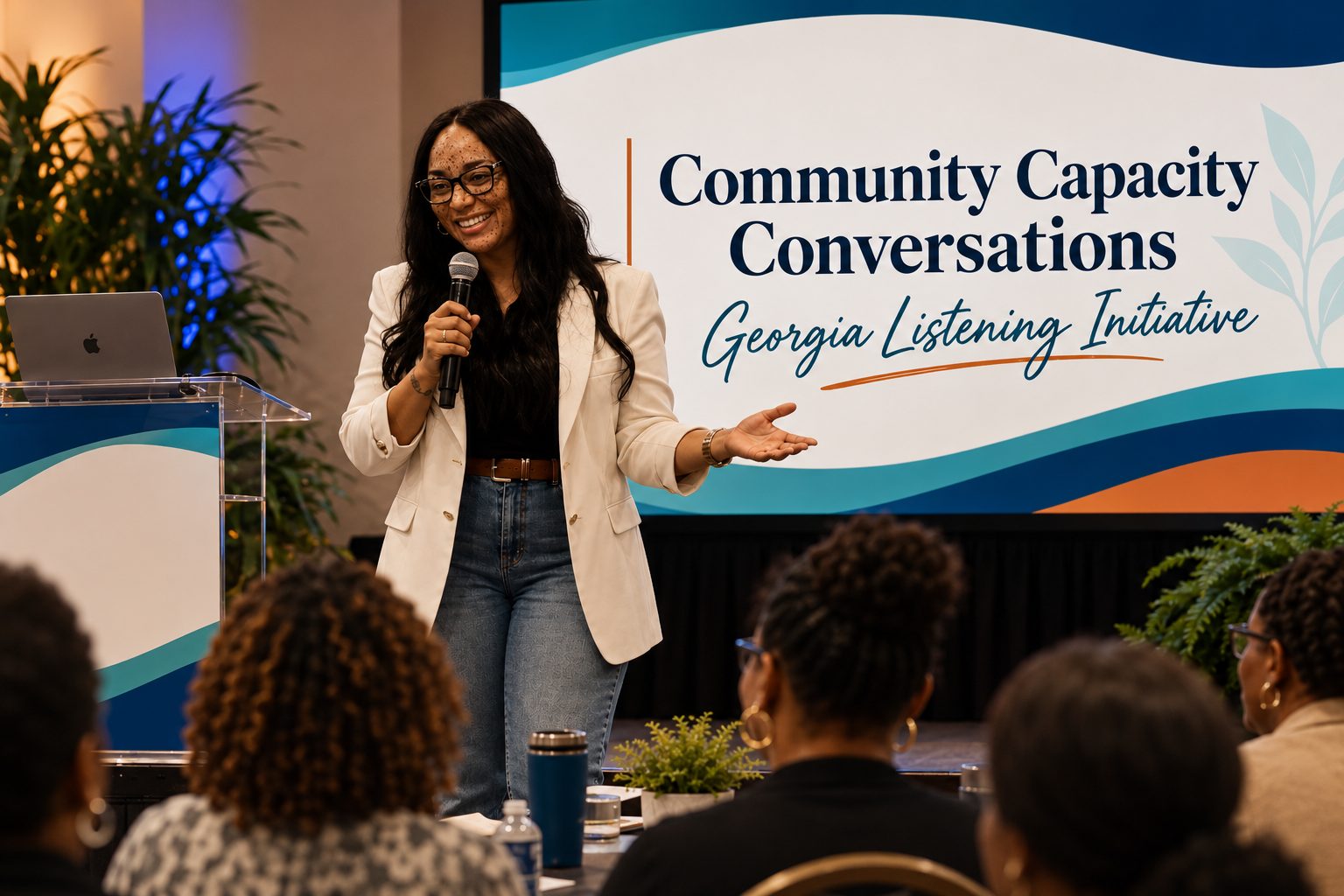
Collaboration across this sector didn't break. It got tired. It started with good intentions — shared referrals, shared trainings, shared frustration at 8am case conferencing calls — and over time it thinned out into everyone doing good work in their own corner, mostly out of proximity, not by design.
Nobody sat down and decided organizations should stop talking to each other. It just happened the way these things happen: turnover, funding cycles, one more reporting deadline, one fewer hour in the day. Community Capacity Conversations exists to put that back together — on purpose, one real conversation at a time.
Frontline staff carry information no dataset captures — what's actually working, what clients actually ask for, what breaks down between intake and resolution. That's not anecdote. That's field intelligence, and right now most of it evaporates in a hallway conversation instead of going anywhere.
Providers spend a lot of energy trying to be visible to clients. Less energy goes toward being visible to each other — who's doing what, who's changed their intake process, who just solved the exact problem you're stuck explaining to your board. Community Capacity Conversations makes that visibility mutual.
A challenge that stays inside one organization is a private frustration. The same challenge, named out loud by six organizations across three counties, is a pattern — and patterns are what move funders, policy conversations, and Balance of State priorities. Your hour is how a real pattern gets documented instead of assumed.
No prep. No homework. No new platform to learn. Just a conversation about what you're already living every day at your organization.
Community Capacity Conversations is built for the full range of people carrying this work, including:
Different vantage points on the same system. That's the point — a program director sees something an outreach worker doesn't, and vice versa. Both are right. Both are needed.
Nobody had ever asked me
what was actually hard about my job.
— Case Manager, Metro Atlanta
"I've sat in a lot of meetings that called themselves collaboration. This was the first one that felt like someone actually wanted to know what I know."— Program Director, South Georgia
"We named a referral problem that I genuinely thought was just our problem. Turns out four other organizations were describing the exact same thing in the exact same week."— Coordinated Entry Specialist, Coastal Region
"An hour. No slides, no ask, no follow-up survey. Just felt like being listened to for once."— Outreach Worker, Middle Georgia
"This is the kind of thing that should've existed years ago. Somebody's finally writing down what we've all been saying to each other in parking lots after meetings."— Executive Director, North Georgia
A Community Capacity Conversation is short, informal, and low-lift by design.
A real conversation, not an interview. Phone, video, or in person — whatever's easiest for you.
Roughly an hour.
Ongoing and statewide. New Conversations happen continuously, not on a single event date.
Themes and patterns show up in reports, Field Notes, and resources for the whole field. All feedback is shared anonymously — no organization or individual is ever identified.
Every Conversation feeds something bigger than the conversation itself:
Real-time observations from across the sector.
Patterns and themes documented for funders, partners, and the field.
Built from what organizations are actually living, shared back so the whole field benefits.
This is the mechanism, not just the mission: what gets said in a Conversation is what eventually shows up in the tools everyone else gets to use.